





Functions And Advantages of Thin-walled Stainless Steel Pipes
Contents |
[edit] Introduction
Stainless steel pipe has high strength, strong corrosion resistance, good toughness, excellent vibration and shock resistance, and it is not brittle at low temperature. In the process of water delivery, it can ensure the purity of water quality.
Thin-walled stainless steel pipe has the following advantages: excellent mechanical properties, excellent wear resistance, good safety and health performance, good temperature resistance, good thermal insulation performance, smooth inner wall, low water resistance and 100% recyclable.
The following is a specific introduction to the role and advantages of thin-walled stainless steel pipes.
[edit] Thin-walled stainless steel pipes
Chromium reacts with oxygen and oxidant in thin-walled stainless steel pipes and produces a passivation effect. A thin and tough dense passivation film Cr2O3 is formed on the surface of the steel pipe, which plays a protective role in corrosion resistance.
If stainless steel pipes and fittings are treated by impurity removal, pickling and passivation, the thickness of Cr2O3 generated can be increased, and the uniformity of compactness will be enhanced. By polishing of stainless steel pipes and fittings, not only can surface defects can be eliminated, but also the passivation film will be more delicate and dense, so as to reduce the probability of pitting corrosion. At the same time, the inner wall of the pipe is smooth and smooth, and friction is low, which further improves the hydraulic performance of the pipe and saves the consumption.
[edit] Uses and functions
Stainless steel pipe is safe and reliable, hygienic and economical. The thin-walled of the pipe and the development of new reliable, simple and convenient connection methods make it have more and more advantageous compared to other pipe materials.
Galvanized steel pipe, as a common pipe material, is easy to corrode. Under the influence of relevant national policies, galvanized steel pipes will gradually be withdrawn. Plastic pipes, composite pipes and copper pipes have become the common pipe materials of pipeline systems. However, in many cases, the stainless steel pipe has more advantages, especially the thin-walled stainless steel pipe with wall thickness of 0.6-1.2mm in high-quality drinking water system, hot water system and water supply systems.
[edit] Advantages of thin-walled stainless steel pipes
Thin-walled stainless steel pipe has the following outstanding advantages: excellent mechanical properties, excellent wear resistance, good safety and health performance, good temperature resistance, good thermal insulation performance, smooth inner wall, small water resistance, beautiful appearance, clean, fashionable, 100% recyclable, conducive to saving water resources, wide range of use, long service life, low comprehensive cost, etc.
[edit] Related articles on Designing Buildings Wiki
Featured articles
Check out some of the best features and news from Designing Buildings as well as key stories from around the web.

Why construction can't afford to ignore the skills gap.
Building Safety Regulator, 19 August

Gill Kernick appointed Independent Chair of Residents’ Panel.
Connecting knowledge, technology and conservation
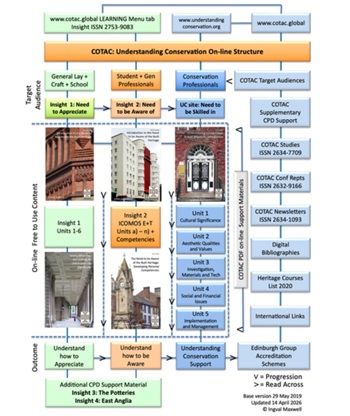
Building competence for the future of built heritage.
Building Regulations and Building Safety Act

CIOB publishes free advice for non-domestic clients.

Building Safety Newsletter from MHCLG.

An extraordinary record of steel engineering worldwide.

Households living near new pylons to save on bills.

ECA warns growth must not outpace grid capacity or skills.
The role of the client and decision making

CIOB response to built environment professions call for evidence.
Construction's sustainability reporting revolution
Tracking upfront embodied carbon with digital tools.
ECA welcomes procurement reforms

Public spending must back British jobs and skills.
Campaigning for Edinburgh: the Cockburn Association 1875-2049

The role of the civic voice in protecting character. Book review.